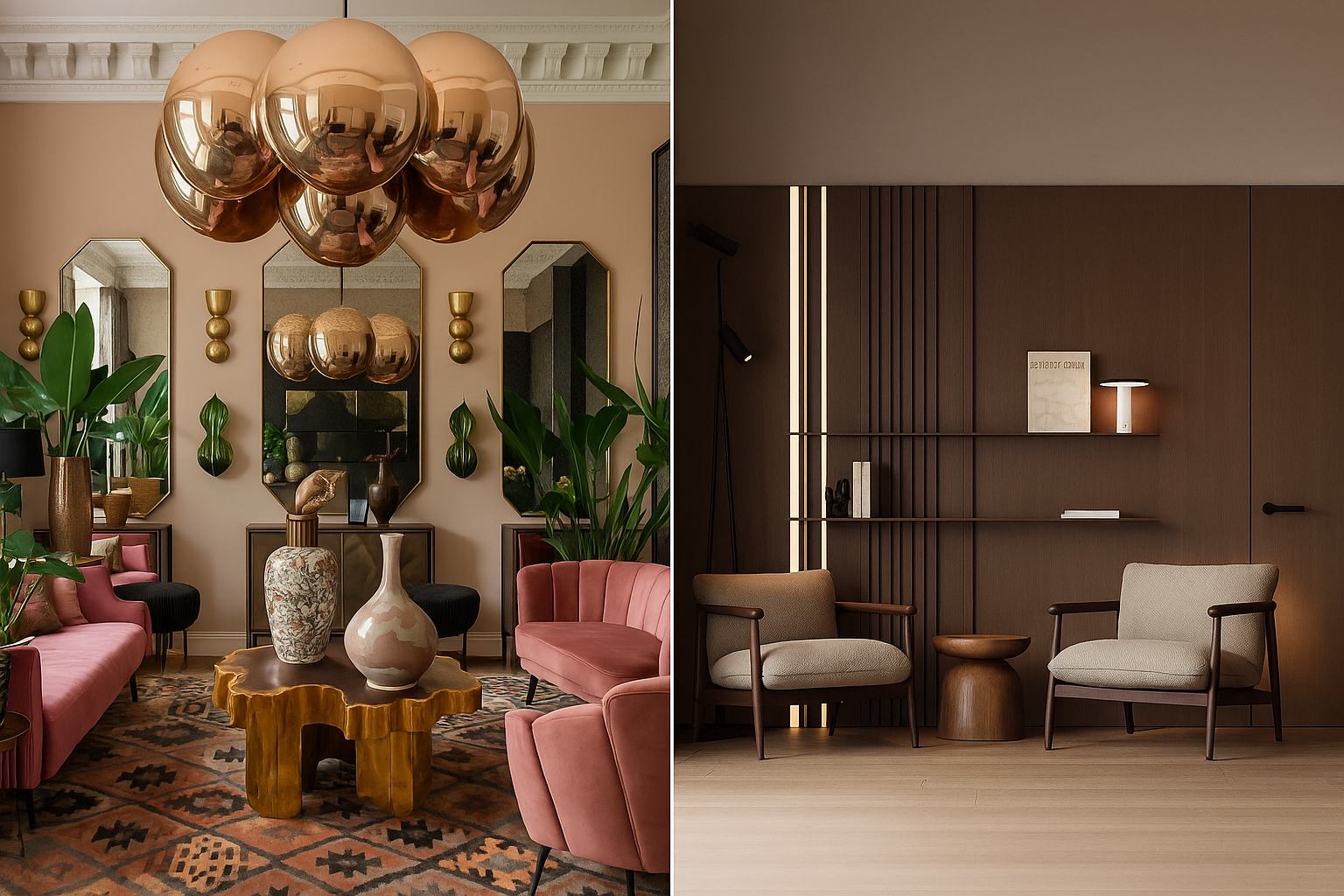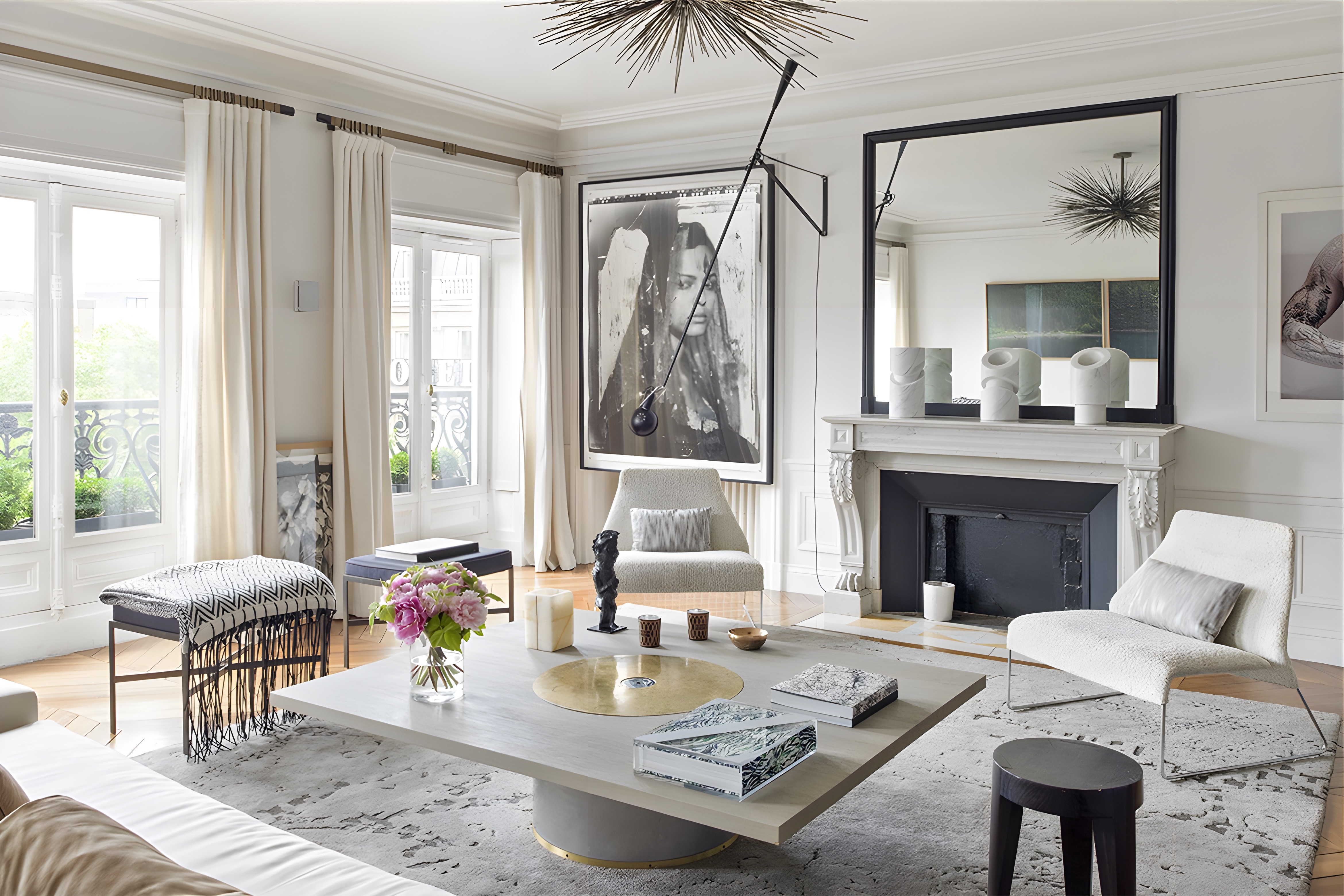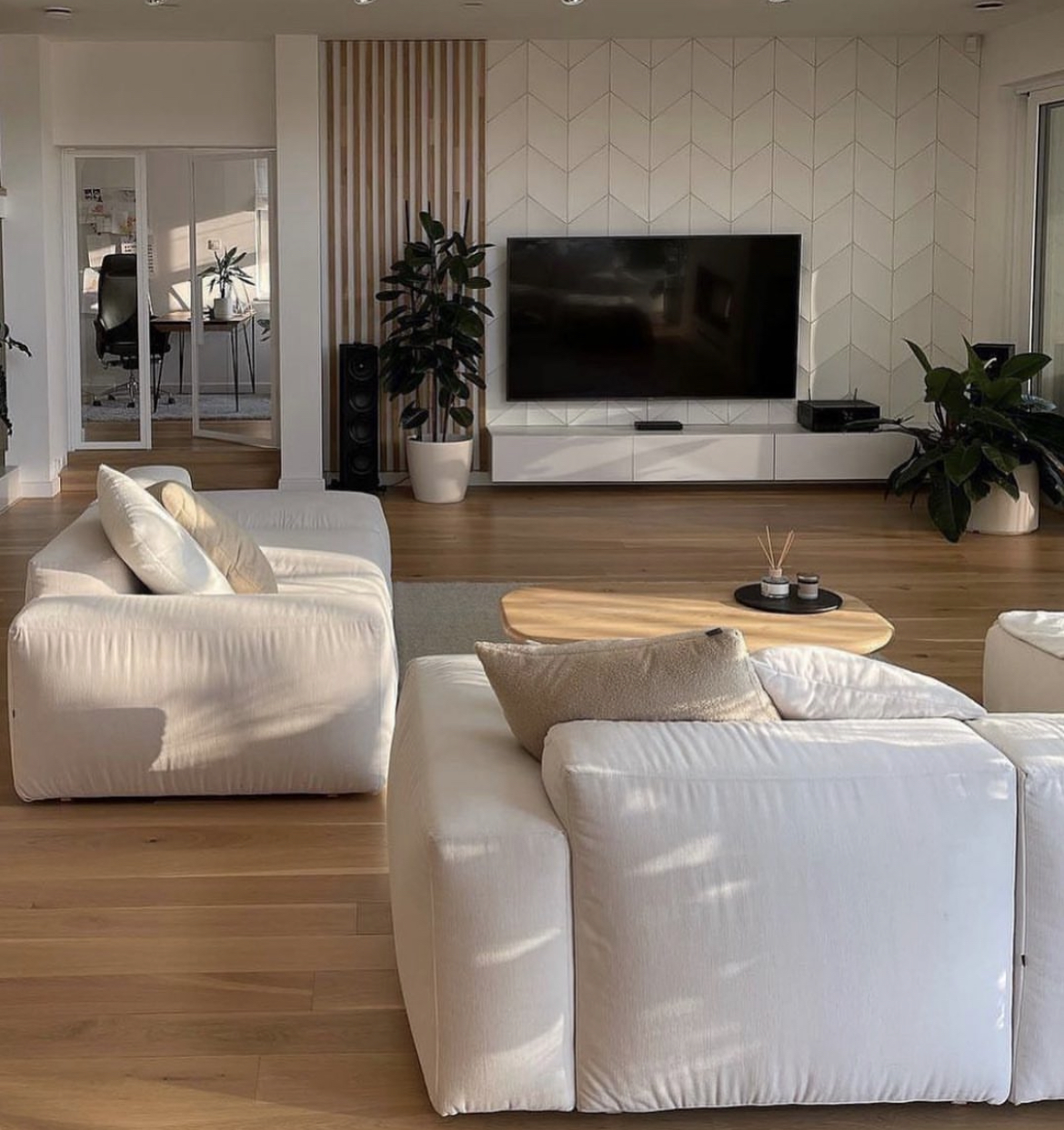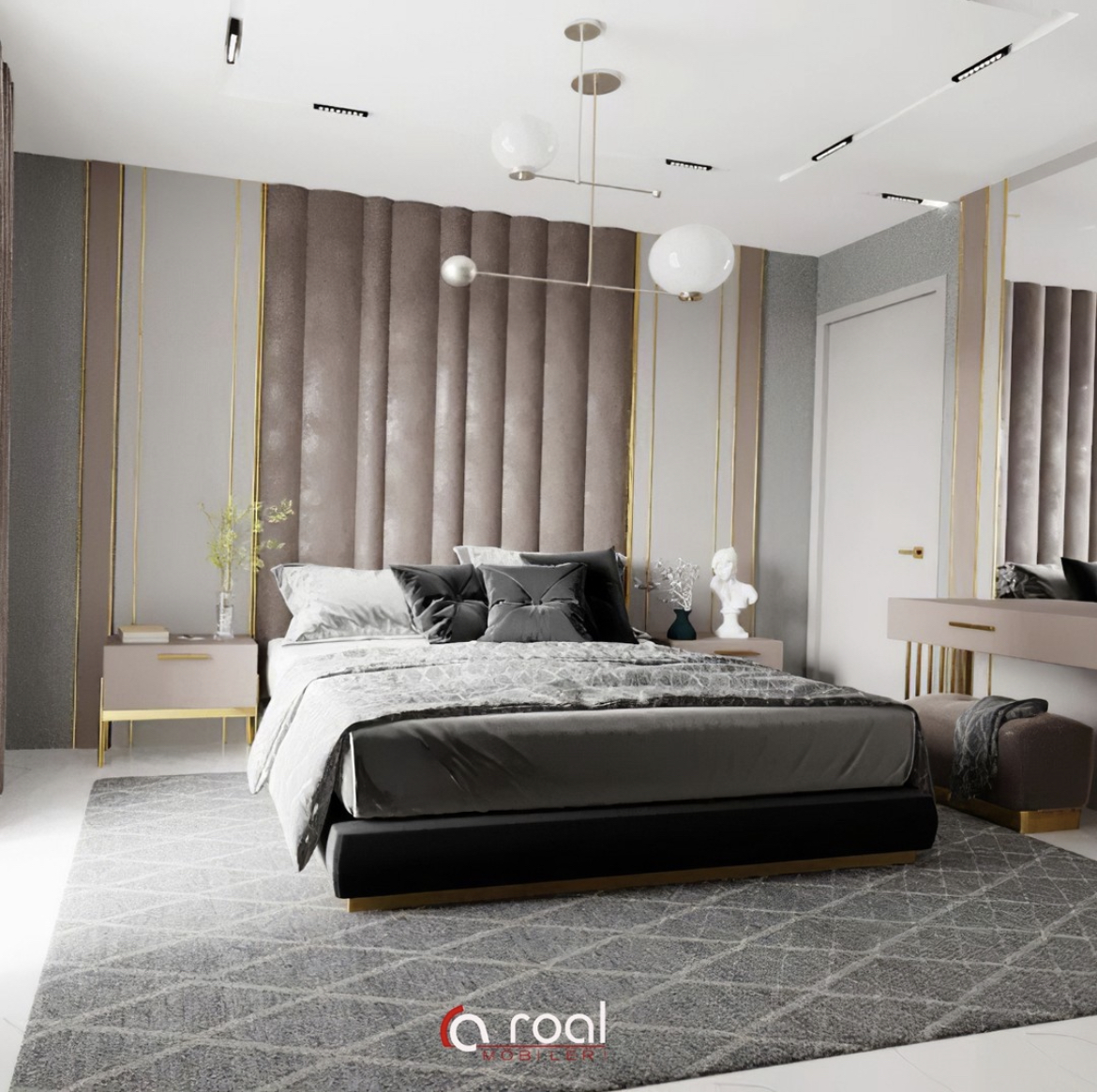
Are you a “one vase, one chair, one happy soul” person or the “if it sparks joy, bring three of them” type? In Albania, where homes often pivot between cosy 60-80 m² flats and family houses that host Sunday lunches for twelve, choosing between minimalism and maximalism is more than an aesthetic debate – it is about daily comfort and cultural rhythm.
Minimalism, Albanian Edition
Minimalist interior design is still about simplicity and clean lines, but it also has to wrestle with real-life issues such as dusty summer winds and winter storage for thick duvets. Here’s how minimalism can work locally:
- Built-in storage: Floor-to-ceiling wardrobes hide winter blankets and the extra set of dishes you keep for surprise guests.
- Folding dining tables: A wall-mounted drop-leaf table makes space for daily life yet opens wide when the extended family drops by.
- Neutral but warm palette: Think stone, sand and olive-wood tones that echo our coastline and mountains, rather than stark laboratory white.
- Easy-to-clean surfaces: Matte lacquer or beechwood sealed with natural oil stands up to seaside humidity and mountain fireplaces alike.
Maximalism with a Balkan Heart
Maximalism celebrates abundance – perfect for those of us who never come home from a weekend trip without a handmade clay bowl or another vintage kilim. To keep it joyful, not chaotic, try these tactics:
- Colour anchoring: Choose a main colour (terracotta, emerald, or saffron) and let every other pattern tip its hat to that shade.
- Story walls: Cluster family photos, festival tickets and framed embroidery on one gallery wall instead of scattering them on every surface.
- Layered textiles: Combine flokati rugs with flat-woven kilims; mix velvet cushions with traditional embroidered shajak.
- Open shelving: Display ceramic pitchers, books and travel trinkets but leave breathing space between clusters – your eye needs rest.
Budget & Sustainability Tips
Whether you go minimal or maximal, Albania offers plenty of wallet-friendly, eco-friendly options:
- Hunt for solid-wood pieces in local second-hand markets and give them a new finish.
- Commission a carpenter from your region to build bespoke floating shelves from native chestnut or ash.
- Swap décor seasonally: rotate cushion covers and table runners instead of buying new furniture.
Still Torn? Try the 60/40 Rule
Devote about 60% of your room to calm, neutral surfaces (the sofa, wall colour, large storage). Use the remaining 40% for personality punches: bold artwork, patterned curtains, or that flamboyant lamp you found on holiday. The result feels curated, not chaotic.
Quick Quiz: Your Style in Five Seconds
You find a hand-painted ceramic bowl at the bazaar. Do you…
A) Celebrate its beauty by making it the single centrepiece on your table? → You lean minimal.
B) Buy three more in different patterns, stack them on the sideboard, and plan a mezze night? → Hello, maximalist!
If you answered both, you’re officially a “mini-maxi” hybrid – and that is perfectly fine.
Maintenance Matters
Remember that open shelves love dust as much as they love your souvenirs. If your schedule is tight, minimalism might save you weekly cleaning time, whereas maximalism rewards hobbyists who enjoy a Saturday dust-and-rearrange ritual.
The Takeaway
Neither style is right or wrong. Minimalism offers calm in a fast-paced world; maximalism provides warmth and storytelling in a culture that values hospitality. Identify what makes you feel at ease, honour your day-to-day lifestyle, and let your home reflect the best version of you – whether that is “less,” “more,” or a delightful dance between the two.