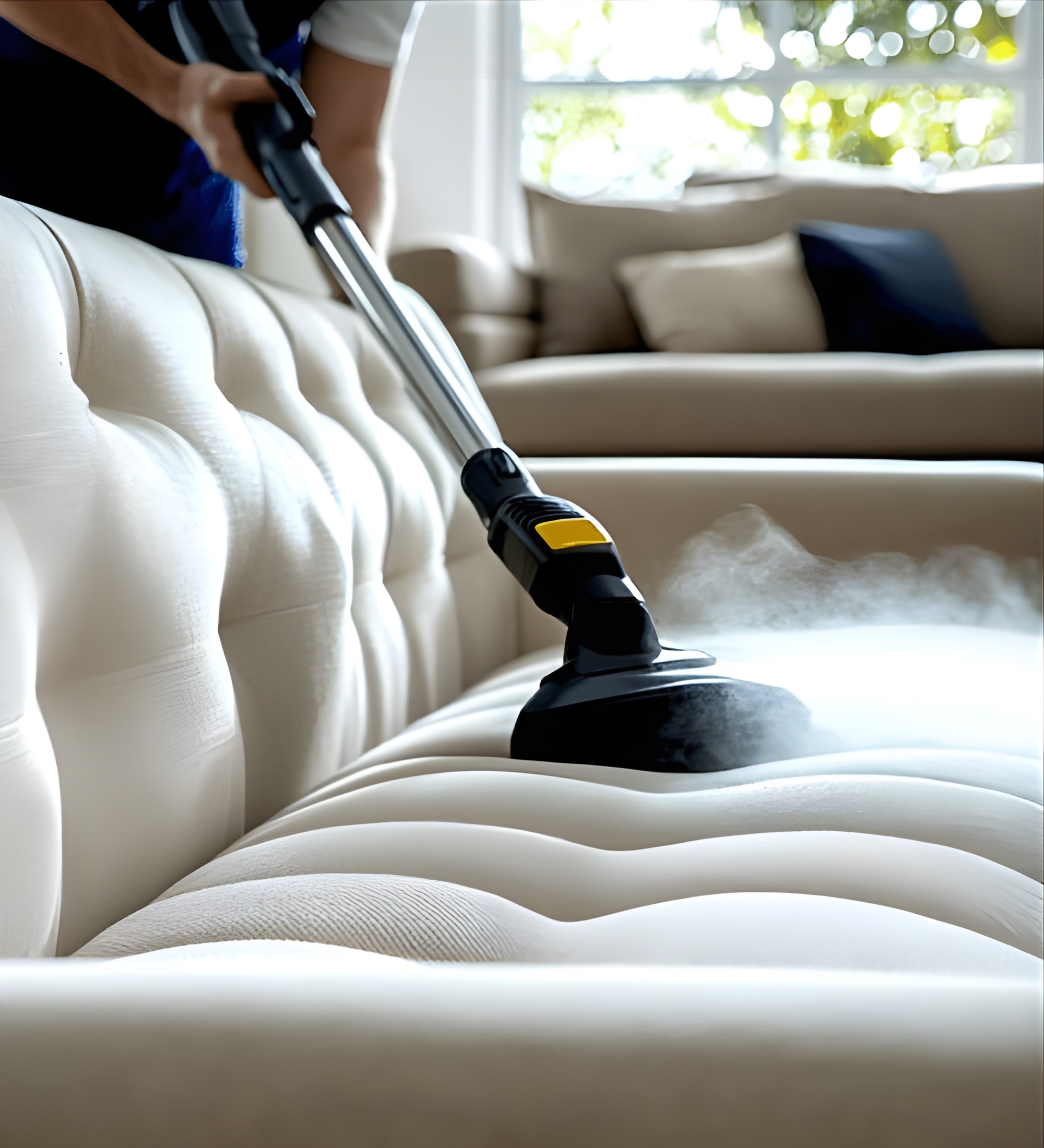
Cleaning upholstery at home requires different approaches depending on the material. Below, we provide a comprehensive guide for fabric, leather, and microfiber upholstery. For each type, you’ll find step-by-step cleaning methods to tackle pet odors, wine stains, and general dirt, along with recommended household or commercial products. We also highlight important do’s and don’ts to avoid damaging your furniture. Always check the care tag on your upholstery and test cleaning solutions on a hidden spot first to ensure they’re safe for your specific fabric or leather.
Fabric Upholstery
Fabric couches and chairs (cotton, polyester blends, etc.) are common and generally durable, but they can trap odors and stains in their fibers. Always start by vacuuming the furniture to remove loose dirt and pet hair. Use the upholstery attachment to get into crevices and seams. Regular vacuuming prevents dirt from grinding into the fabric. For deeper cleaning, follow the methods below for specific issues:
Pet Odors on Fabric
- Baking Soda Deodorizing: Sprinkle baking soda generously over the fabric, focusing on smelly areas. Let it sit for at least 15 minutes (longer or overnight for strong odors), then vacuum thoroughly.
- White Vinegar Solution: Mix equal parts white vinegar and water in a spray bottle. Lightly mist the fabric, let sit a few minutes, then blot with a soft cloth. Don’t use hot water with vinegar; cool or lukewarm is best.
- Enzyme Cleaner: For urine odors, use an enzyme-based pet odor eliminator. Test first on a hidden spot, apply as directed, let sit, then blot dry.
- Fabric Deodorizers: After cleaning, spray a fabric refresher (e.g., Febreze) safe for upholstery and let the couch dry completely.
Do’s and Don’ts: Keep the area well-ventilated; let everything dry fully; don’t use ammonia or harsh chemicals on pet odors; don’t steam clean urine smells without pre-treating.
Wine Stains on Fabric
- Act Fast: Blot (don’t rub) immediately with a clean white cloth, working from the outside in.
- Club Soda or Cold Water: Pour a small amount onto the stain after blotting and continue to blot.
- Salt Trick: Cover fresh stain with salt for 15–30 minutes, vacuum away, then clean.
- Dish Soap Solution: Mix 1 tsp liquid dish soap with 2 cups cool water, dab, then rinse with water and blot dry.
- Vinegar & Baking Soda: Sprinkle baking soda, add vinegar, let fizz, blot, repeat if needed.
- Hydrogen Peroxide (3 : 1 with dish soap): Test first, apply for 20 minutes, blot, rinse thoroughly.
- Commercial Removers: Use products like Wine Away following label directions.
Do’s and Don’ts: Address spills immediately; use white cloths; test peroxide; don’t use hot water; avoid vigorous scrubbing.
General Dirt on Fabric
- Vacuum & Brush: Start with thorough vacuuming and a soft-bristle brush.
- Mild Cleaning Solution: Mix a few drops of mild dish soap in warm water (plus 1 Tbsp vinegar if desired). Wipe with sudsy cloth, then rinse and blot dry.
- Drying: Blot with a towel and air dry with good ventilation or a fan.
- Commercial Upholstery Cleaners: Follow label instructions; ensure suitability for fabric type.
- Regular Maintenance: Vacuum weekly, spot-clean spills promptly, use washable slipcovers if possible.
Do’s and Don’ts: Use gentle cleaners and blot; test first; don’t soak fabric; don’t use bleach; ensure thorough drying.
Leather Upholstery
Leather furniture adds luxury but needs special care. Determine whether you have finished/pigmented or unfinished/aniline leather and avoid harsh chemicals or excessive water. Use distilled water when possible and always condition after cleaning.
Pet Odors on Leather
- Surface Cleaning: Vacuum or wipe with a dry microfiber cloth.
- Baking Soda: Sprinkle on cushions, leave several hours, then vacuum.
- Light Vinegar-Water Wipe: 50/50 white vinegar & distilled water, lightly wipe, dry immediately, then condition.
- Activated Charcoal: Place near cushions to absorb odors.
- Enzyme Cleaners (if safe for leather): Spot-treat urine cautiously.
- Air & Indirect Sunlight: Ventilate and allow brief morning sun exposure.
Do’s and Don’ts: Blot urine immediately; use minimal liquid; test first; don’t flood leather or use air freshener sprays; always condition afterward.
Wine Stains on Leather
- Immediate Blotting: Press gently with a clean cloth; don’t rub.
- Mild Soap Suds: Use soap foam (not water) to dab and lift stain.
- Wipe & Dry: Remove residue with damp cloth and dry immediately.
- Leather Cleaner/Conditioner: Apply after stain removal.
- Club Soda Flush (for finished leather): Pour lightly, blot, repeat if needed.
- Specialized Stain Removers: Use if stain is older or set; follow product instructions.
Do’s and Don’ts: Use mild soap sparingly; keep cloths soft; condition afterward; don’t use harsh chemicals or abrasive tools; air-dry naturally.
General Dirt on Leather
- Dust & Vacuum: Weekly dusting and vacuum with soft brush attachment.
- Mild Cleansing Wipe: Dampen cloth in distilled water with tiny drop of mild soap; wipe, then dry.
- Stubborn Dirt: Slightly stronger soap mix or very light magic-eraser use (finished leather only).
- Conditioning: Apply leather conditioner after cleaning; 2–4 times a year.
- Protection: Use protectants; keep away from direct sunlight and heat sources.
Do’s and Don’ts: Follow manufacturer’s instructions; avoid excessive water, alcohol, or acetone; condition regularly; seek professional help for major issues.
Microfiber Upholstery
Microfiber is durable and stain-resistant but can water-spot. Always check the cleaning code (W, S, W-S, X) on the tag before cleaning and test in an inconspicuous area.
Pet Odors on Microfiber
- Vacuum & Lint Roll: Remove pet hair and dander thoroughly.
- Baking Soda Deodorizing: Sprinkle, let sit, vacuum up.
- Vinegar Spray (W/W-S): 1 : 1 vinegar to water light mist; air-dry fully.
- Enzyme Cleaner (W): Spot-treat urine with enzyme solution; blot dry.
- Dry Solvent Methods (S): Lightly mist rubbing alcohol; blot and let evaporate.
- Fabric Refresh Sprays: Use only on W/W-S coded microfiber.
Do’s and Don’ts: Observe cleaning code; don’t oversaturate; use baking soda freely; ensure thorough drying; vacuum residues.
Wine Stains on Microfiber
- Immediate Blot: Remove as much wine as possible quickly.
- Water-Safe (W/W-S): Mild soap suds dab and rinse; repeat or use vinegar mix if needed.
- Solvent-Only (S): Spray rubbing alcohol, blot; repeat until stain lifts.
- Hydrogen Peroxide Mix: For light-colored microfiber only; test first.
- After Cleaning: Air-dry and brush fibers to restore texture.
Do’s and Don’ts: Use alcohol for S code; be gentle; don’t soak S-coded fabric with water; act fast for best results.
General Dirt on Microfiber
- Regular Vacuuming: Weekly or bi-weekly to remove dust.
- Deep Clean (W/W-S): Foam soap solution, gentle scrub with suds, wipe, air-dry, brush.
- Solvent Clean (S): Spray dry-cleaning solvent or rubbing alcohol; wipe; ventilate.
- Restoring Texture: Light steam (W) or brushing to lift nap.
- Preventive Tips: Use throws, avoid eating on couch, clean pet paws.
Do’s and Don’ts: Follow W/S code; vacuum regularly; don’t use bleach or high heat; brush fibers after cleaning.
By following these tailored approaches for fabric, leather, and microfiber upholstery, you can safely tackle pet odors, remove wine stains, and clean general dirt—using household ingredients or readily available cleaners. Act quickly on stains, use gentle cleaners, test first, and avoid over-wetting. With regular care, your upholstery will stay fresh, stain-free, and comfortable for years to come.